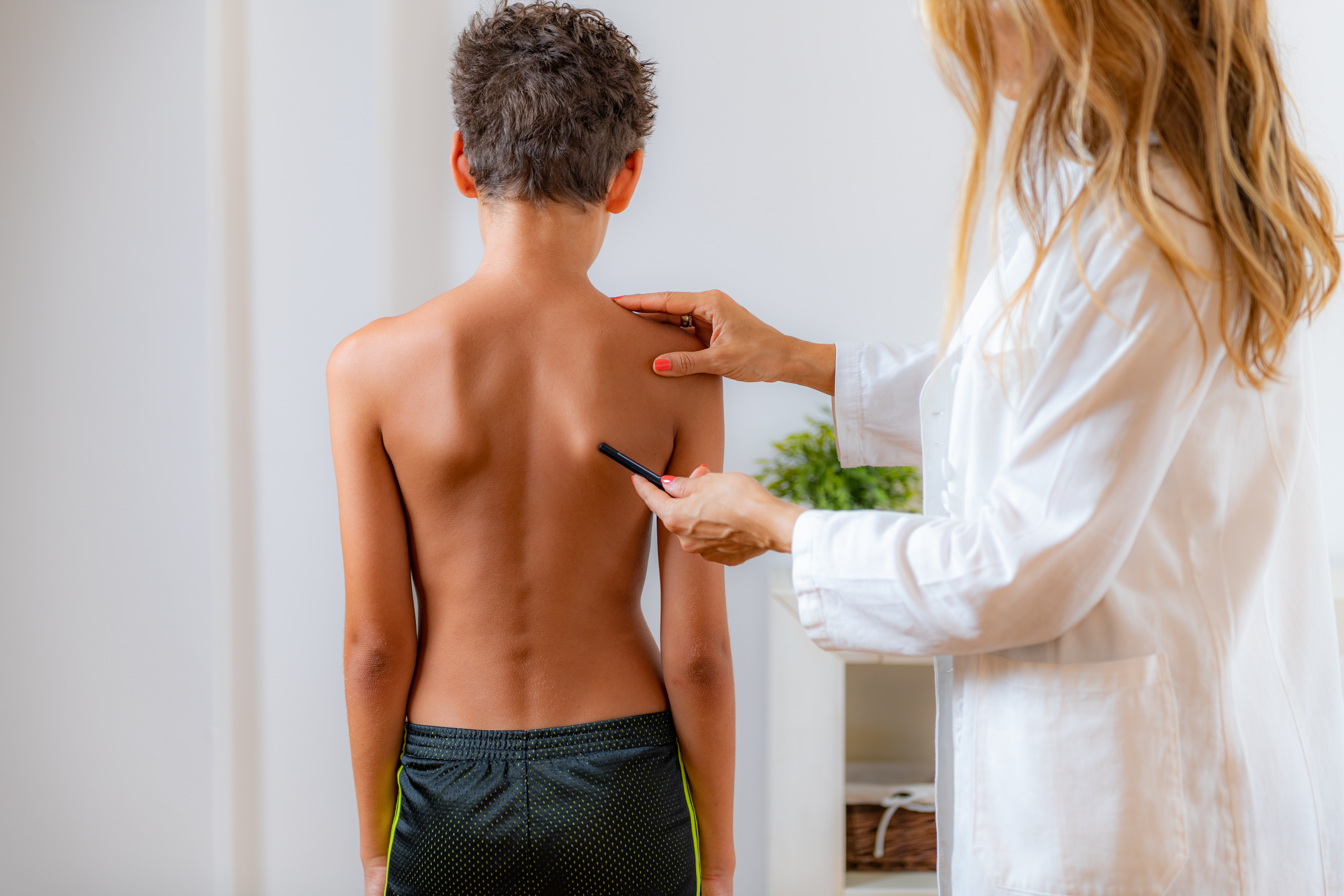
What Is Scoliosis?
Scoliosis is a condition where the spine curves sideways. Usually, this curve appears during the growth spurt just before puberty. While mild curves may not cause problems, severe scoliosis can affect breathing and movement. For this reason, early detection of scoliosis in teenagers is important. Scoliosis can affect both boys and girls, but it is more common in girls. Most cases are mild, but some may need treatment to prevent the curve from getting worse.
Why Is Scoliosis Screening Important for Teens?
Early scoliosis screening in teens helps find the condition before it worsens. Because teens grow quickly, their spine can change shape fast. Therefore, school scoliosis screening programs are common in many areas. Early detection allows for simple treatments, like wearing a brace, which can stop the curve from getting worse. In some cases, early treatment prevents the need for surgery. Also, screening helps parents and teens understand the signs of scoliosis in teens.
Common Symptoms and Warning Signs
Although some teens may not notice any symptoms, there are warning signs to watch for. For example, you might see:
However, not all back pain means scoliosis. If you notice these signs of scoliosis in teens, it is best to seek advice. Early detection can make a big difference.
How Scoliosis Screening Is Done
Most often, orthopedic screening for adolescents happens at school or during a regular doctor visit. During the exam, the teen will be asked to bend forward. This is called the Adam’s Forward Bend Test. The doctor or nurse looks for unevenness in the back or ribs. Sometimes, a simple tool called a scoliometer measures the curve. If the test shows a possible curve, the doctor may order an X-ray to confirm the diagnosis. The process is quick and painless.
What Happens After Screening?
If the screening shows signs of scoliosis, the next step is usually an X-ray. This helps the doctor see how much the spine is curved. Based on the results, the doctor may suggest:
Most teens with mild scoliosis do not need surgery. Instead, they are monitored as they grow. Early detection of scoliosis in teenagers often leads to better outcomes.
Prevention and Lifestyle Tips
While you cannot always prevent scoliosis, healthy habits can support your teen’s spine. For instance, encourage your teen to:
Additionally, regular check-ups help catch any changes early. Although lifestyle changes cannot cure scoliosis, they can help keep your teen healthy and strong.
When to Consult an Orthopedic Specialist
If you notice any signs of scoliosis in your teen, it is important to consult an orthopedic specialist. For example, if your teen has uneven shoulders or back pain, do not wait. Early orthopedic screening for adolescents can help prevent problems later. Specialists can guide you on the best treatment options. Remember, early action leads to better results.
If you notice any signs of scoliosis in your teen, consult an orthopedic specialist for personalized advice.